
(Updated for October 2024. Originally posted in October 2019)
October 6th kicks of Fire Prevention Week. Children across the country will not only be learning about how to help prevent fires but also what to do if there is one. This is an important safety step for all children. Learning it, briefly, at school isn’t enough. Practicing these things at home where they might need to use these skills is paramount. The proper steps and escape plan at home needs to be second nature. There won’t be a teacher at the head of the class or other kids to follow. There will be precious toys or even more precious pets that could easily distract a child. Practicing at home is the most important step on your fire prevention check-list!
Escape Route
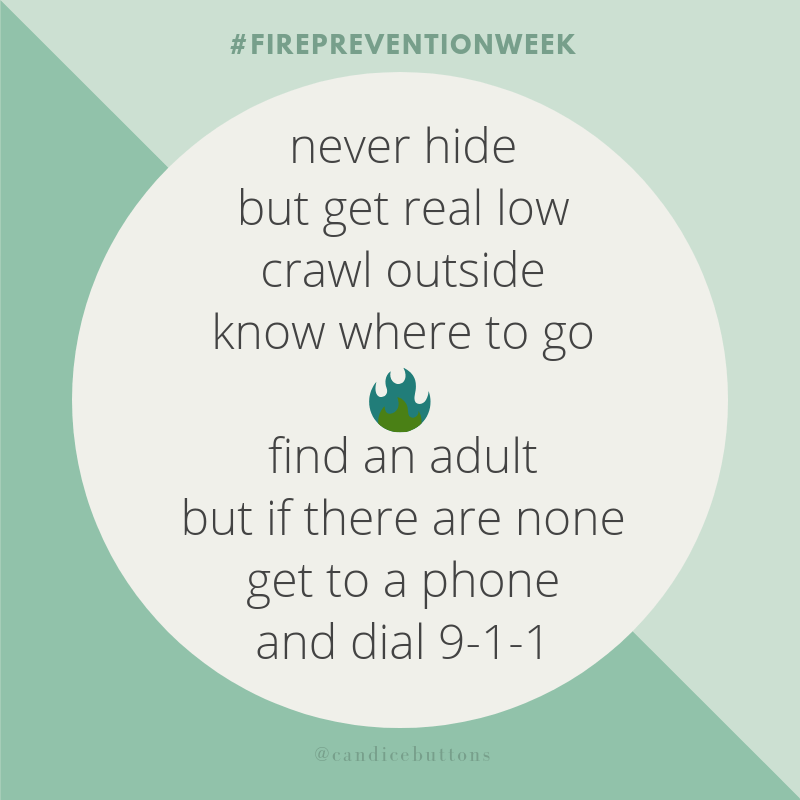
Every family should have an escape route planned out, covering both exits. Practice, practice, practice! This is so important. The more you practice the easier it will come to them in an actual emergency. If it’s second nature they won’t have to scramble to remember if there is an actual fire. This also gives really little kids the opportunity to learn the route in a hands-on way. This ensures that they know who’s hand to hold or who to follow out. They don’t always understand what we’re saying so practicing is very important for them. And don’t forget to practice getting low (under the smoke) and crawling out.
Pets Are Not Their Responsibility
This is a tough one. Pets can be like family, especially to a child, and for that very reason it’s important to make sure they understand that the family pet is not their responsibility in an emergency. Under no circumstance do you want your child to deviate from your escape plan to search for a pet. That’s for an adult to deal with, not them, not ever. This sounds harsh, but your child is not equipped to make decisions in this situation. It’s important not to over-burden them in an emergency. It also helps you in the long run because if they can follow the plan without much guidance you gain a little more freedom to deal with the pets yourself.
Help!
An important thing to include in your escape plan is where to go. So your children have crouched and crawled. They’ve made it outside, but now what. A designated spot to meet needs to be clear and easily accessible. Once there, they need to know exactly where to go for help. Preferably a neighbour that you trust, but don’t forget to discuss variables, like that specific neighbour not being home.
Do your kids know how to use the phone? Can they call 9-1-1? Sometimes we forget that this is an important skill. Have them call your cell phone or your partner’s phone from yours. Have them call a family member who’s willing to help them practice. They can’t call for help if they can’t figure out how to work the phone.
Smoke Detectors
This is a great time to double check your smoke detectors. Every home should be equipped with smoke detectors on every floor, minimum. This is your first line of defence in a fire. Functional alarms can have you up and out of the house before the smoke gets thick. Remember, most people die from smoke inhalation, not burning alive. Yes, that’s morbid, but there’s no sugarcoating it.
Laundry Lint
When was the last time you vacuumed your dryer hose? Dry lint collecting in a hot metal hose can cause a serious problem. Not only because of the fire itself but because of the fact that the fire itself can stay contained for a little longer, meaning you may have less time to leave your house by the time you realise there’s an issue. Now is a good time to vacuum your dryer hose, furnace vents, and furnace filters to keep them debris-free.
Important Documents
Keep your important documents folder somewhere easily accessible along the escape route. Even we adults can be flustered in an emergency, and like we do for our children, we need to streamline our own escape route. We’ll be juggling kids, pets, and self safety and the last thing you want to do is worry about your wallet, kids health cards, or anything else you’ll probably really need if your house is on fire. Keep those documents neat and easy to grab. I keep the important ones like birth certificates and passports in a ziplock bag so that they can’t get wet and they’re easy to pull out and go.
Where are your shoes?
Children are notorious shoe losers. We’ve all been running late only to discover one random show has somehow disappeared. I keep all of our flip-flops (the basic ones we generally only wear to the pool/beach) in a basket by the door. This ensures that we always have something to put on our feet if we’re a shoe short. (Not as great in the snow, but at least Winter boots seem to stay near the exit better than sneakers or sandals!)
Are you ready for Fire Prevention Week? Here are some great websites I found to help you gather your resources!
Statement by Minister Sajjan on Fire Prevention Week (2024)
Canadian Fire Safety Association
Stay safe everyone!
xxo
C
 Bobbles&Buttons